


How to write an RFQ for complex medium-series manufacturing
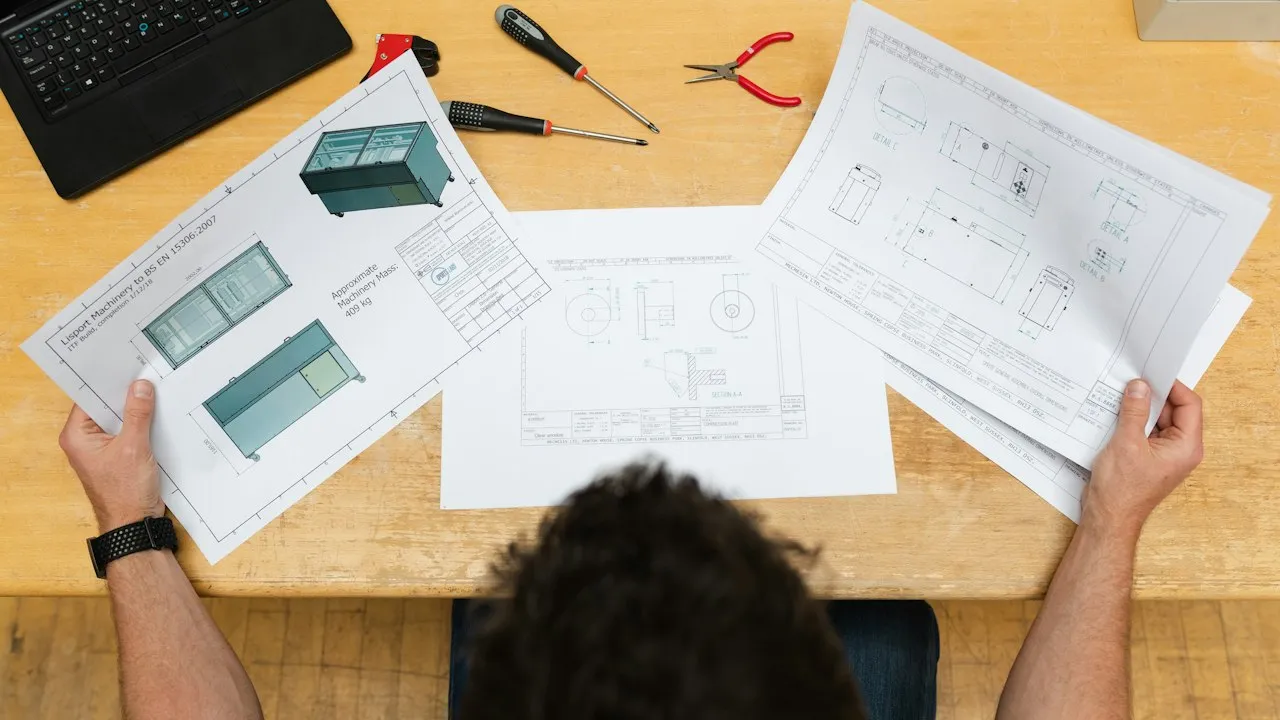
A request for quotation for a complex manufactured product is far more than a document used to compare prices. For medium-series production, it becomes a shared operational reference for engineering, procurement, quality and logistics teams. A well-prepared RFQ reduces interpretation gaps before production begins, helps suppliers assess risk accurately and supports a more reliable industrial supply chain.
A complex manufacturing RFQ aligns the full production programme
Complex medium-series manufacturing often combines mechanical parts, purchased components, assembly operations, testing, packaging and delivery constraints. When a procurement team sends only a drawing and a requested quantity, suppliers must make assumptions about materials, tolerances, sourcing, controls and lead times. Those assumptions can later become cost revisions, production delays or quality disputes.
An RFQ should therefore provide a structured view of the product and its expected lifecycle. It should clarify what is already defined by the customer, what remains open for supplier input and which decisions must be validated before launch. This approach helps you compare quotations on a like-for-like basis rather than selecting the lowest initial price without understanding exclusions.
Integrated industrial manufacturers can support this process by coordinating purchasing, fabrication, assembly, quality control and logistics within one operating model. Their work may cover machining, sheet metal, welding, surface treatment, component sourcing, assembly and functional testing, depending on the product. For broader context on these industrial capabilities and production organisation, you can learn more. A partner with integrated processes can also identify interfaces between operations that may affect lead time, quality or total cost.
Medium-series volumes require precise assumptions
Medium-series production occupies a distinct position between one-off prototypes and high-volume industrial programmes. The supplier must often invest in fixtures, test equipment, process documentation or supplier qualification, while production volumes may not justify fully automated lines.
State the expected annual volume, the total programme volume and the planned delivery cadence. For example, an RFQ for 1,200 units over three years should specify whether deliveries will be monthly, quarterly or released through individual purchase orders. A supplier can then assess workforce planning, material purchasing and storage needs with greater accuracy.
The technical package should remove avoidable ambiguity
The quality of the quotation depends directly on the quality of the information supplied. A complete package does not mean that every engineering choice is frozen, but it must clearly identify controlled requirements and unresolved points.
Your RFQ should include the latest revision of drawings, 3D models where available, specifications and applicable standards. Revision status matters: a manufacturer cannot quote confidently if the bill of materials refers to obsolete drawings or if a dimensional requirement differs between documents.
The bill of materials should define responsibility clearly
The bill of materials should list every component, subassembly and consumable that affects the finished product. For each line, indicate the part number, description, revision, quantity per unit, approved manufacturer where required and sourcing responsibility.
Clarify whether the supplier must procure standard components, whether customer-furnished material will be provided, and whether alternatives are permitted. If a specific connector, electronic module or coating is mandatory, identify it early. Long lead-time items can determine the achievable delivery date even when fabrication capacity is available.
The following table can help structure the information requested from suppliers:
| RFQ input | What to provide | Why it affects the quotation |
|---|---|---|
| Technical data | Drawings, 3D files, tolerances, materials and revisions | Defines manufacturing methods and inspection needs |
| Bill of materials | Part references, quantities, approved sources and make-or-buy rules | Determines purchasing scope and supply risk |
| Volumes | Prototype quantity, annual forecast and delivery batches | Supports capacity, tooling and inventory planning |
| Quality requirements | Inspection plan, certificates, test procedures and acceptance criteria | Establishes control effort and documentation cost |
| Logistics requirements | Delivery location, packaging, Incoterms and labelling | Shapes transport, packing and warehouse operations |
| After-sales needs | Spare parts, repair process and service duration | Extends obligations beyond initial production |
Quality requirements must be measurable
Terms such as “high quality” or “industrial grade” are not sufficient quotation criteria. Define the expected inspection level, required certificates, traceability depth and acceptance process. State whether first article inspection, sample approval, dimensional reports, material certificates or serial-number tracking are required.
For assemblies, specify functional tests and pass-fail criteria. If the supplier must create a test bench, identify whether the equipment becomes customer property and whether it will be reused for future batches. Traceability requirements should also cover the level needed for purchased parts, critical processes and final product records.
Logistics and lifecycle constraints belong in the original request
Procurement teams sometimes treat packaging, delivery and after-sales service as matters for later negotiation. For complex products, these topics affect the manufacturing quotation from the beginning.
Specify delivery addresses, requested lead times, batch sizes, receiving constraints and packaging standards. A fragile electro-mechanical assembly may require custom protection, moisture barriers, serialised labels or returnable packaging. These requirements influence material selection, packing time and freight costs.
You should also state the expected product support period. If spare parts must remain available for five or ten years, the supplier needs to consider component obsolescence, storage conditions and minimum purchase quantities. After-sales obligations can affect supplier selection as much as unit price, particularly for equipment with a long operational life.
Supplier questions reveal whether a partnership is viable
A well-designed RFQ asks suppliers to respond with more than a price and a delivery date. Request a list of assumptions, exclusions, commercial conditions and technical risks. This creates a transparent basis for discussions before the purchase order is issued.
Ask potential partners how they manage subcontractors, incoming inspection, non-conformities and engineering changes. Request information on capacity flexibility, production planning and business continuity measures. For components exposed to market shortages, ask whether the supplier can propose qualified alternatives or buffer-stock strategies.
Design for manufacturability should be part of this exchange. A capable manufacturer may identify tolerances that add cost without improving function, difficult assembly sequences or materials that are hard to source. Procurement and engineering can then assess proposed changes before design release, rather than reacting after production has started.
A stronger RFQ creates a more dependable sourcing decision
Before issuing the request, use the following checks to confirm that all internal stakeholders are aligned:
- Confirm that drawings, specifications and the bill of materials carry consistent revision levels.
- Define forecast volumes, minimum order quantities and delivery cadence.
- State inspection, testing, certification and traceability expectations.
- Identify customer-supplied items and approved-source restrictions.
- Include packaging, delivery, spare-parts and repair requirements.
- Ask suppliers to document assumptions, risks, lead times and exclusions.
- Evaluate total operational fit, not only the quoted unit price.
A complete RFQ gives suppliers the information needed to offer realistic pricing and feasible production plans. It also gives your team a sounder basis for selecting an integrated manufacturing partner able to deliver quality, continuity and responsive support throughout the programme.